
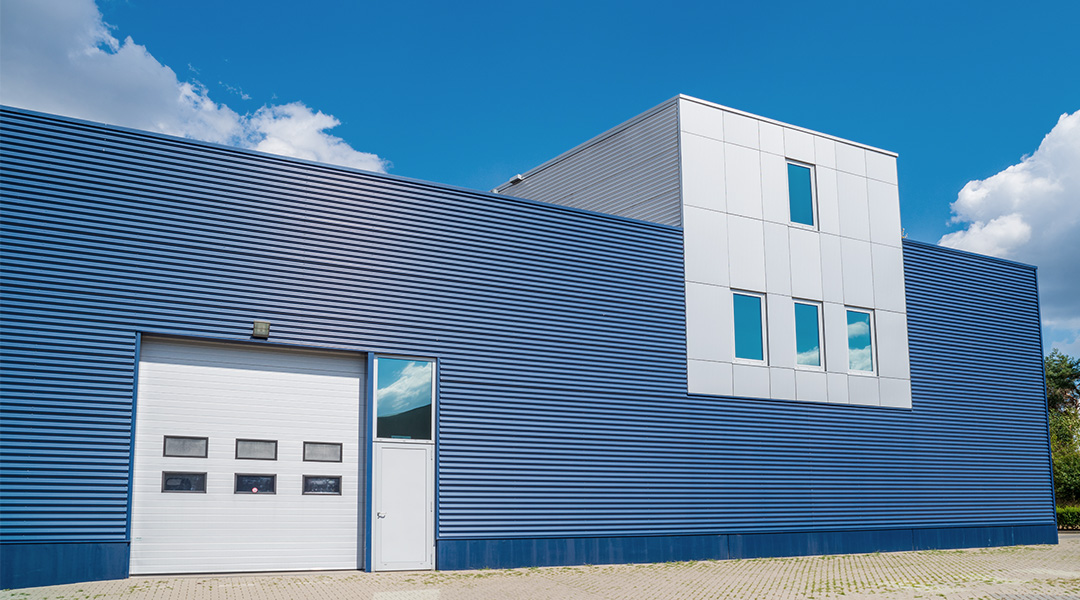
With several commercial metal siding options available, selecting the right panels can improve weather protection, energy efficiency, and the overall appearance of your property.
Understanding the different types of metal siding makes it easier to choose a system that meets your building’s needs, budget and long-term maintenance goals. Whether you’re constructing a new facility or upgrading an existing property, the right siding can provide lasting performance and a professional finish.
Commercial metal siding is an exterior cladding system designed to protect commercial buildings from weather, moisture, and everyday environmental exposure. It is commonly manufactured from materials such as steel and aluminum, with different panel profiles, coatings and finishes available to suit various building designs.
Unlike many traditional siding materials, metal siding offers excellent durability and resistance to common issues such as rot, insect damage, and warping. Many systems also feature protective coatings that help prevent corrosion and maintain their appearance over time.
Commercial metal siding is widely used on warehouses, manufacturing facilities, retail buildings, office spaces, agricultural structures and other commercial properties. Its combination of strength, design flexibility and relatively low maintenance makes it a practical choice for a wide range of applications.
There are several types of commercial metal siding panels available, each offering distinct advantages in terms of appearance, durability, installation and performance. Here’s a closer look at some of the most common options.
Exposed fastener panels are among the most widely used commercial metal siding options because of their straightforward installation and cost-effective design.
What they’re made of:
Typically manufactured from galvanized or coated steel, these panels are secured to the building structure with visible screws or fasteners.
Benefits:
Best for:
Warehouses, storage buildings, workshops, agricultural facilities and commercial projects where affordability and functionality are priorities.
For commercial buildings that require a cleaner exterior appearance, concealed fastener panels offer a sleek and streamlined alternative.
What they’re made of:
These panels are typically manufactured from steel or aluminum and feature fastening systems that hide screws and attachment points beneath or within the panel assembly.
Benefits:
Best for:
Office buildings, retail spaces, commercial developments and facilities where appearance is just as important as durability.
Standing seam panels feature raised vertical seams that connect adjacent panels, creating a distinctive architectural appearance. Although commonly associated with metal roofing, standing seam systems are also used for commercial wall cladding.
What they’re made of:
Usually manufactured from coated steel or aluminum, these panels feature interlocking seams and concealed fastening systems, depending on the product design.
Benefits:
Best for:
Modern office buildings, commercial storefronts, institutional facilities and architectural projects seeking a distinctive exterior design.
Corrugated metal panels feature a repeating pattern of ridges and grooves that adds strength and visual texture to the building exterior.
What they’re made of:
These panels are commonly produced from galvanized steel, coated steel or aluminum.
Benefits:
Best for:
Industrial facilities, agricultural buildings, workshops, warehouses and commercial properties with an industrial or rustic design.
Insulated metal panels are designed to combine exterior cladding and thermal insulation in a single panel system. They can be particularly beneficial for buildings that require consistent indoor temperatures.
What they’re made of:
These panels typically consist of metal facings bonded to an insulating core, commonly made from materials such as polyisocyanurate or mineral wool, depending on the system.
Benefits:
Best for:
Temperature-controlled warehouses, manufacturing facilities, food processing buildings, distribution centers and other commercial spaces with specific insulation requirements.
Aluminum siding is another popular option for commercial buildings, particularly where reduced weight and corrosion resistance are important considerations.
What they’re made of:
These panels are manufactured from aluminum and may feature factory-applied coatings or painted finishes for additional protection and visual appeal.
Benefits:
Best for:
Retail buildings, office complexes, coastal commercial properties and projects where weight and corrosion resistance are key considerations.
When comparing options, many property owners ask, what are the best commercial metal siding panels for their building? The answer depends on the property’s intended use, local climate, design preferences, insulation requirements and budget.
Each panel type offers different advantages, so it’s important to evaluate how the siding will perform under your building’s specific conditions.
Here are a few factors to consider when choosing the right system:
For example, exposed fastener panels may be a practical choice for a budget-conscious warehouse, while insulated metal panels can be a better fit for a temperature-controlled facility. Standing seam or concealed fastener systems may be more appropriate for commercial buildings where architectural appearance is a priority.
The best option is one that balances performance, cost, appearance and the specific requirements of the building.
At Besroi Roofing & Siding, we understand the importance of selecting the right exterior materials for lasting performance. Our team can help property owners explore suitable siding options based on their building requirements, design goals and budget.
If you’re planning a commercial siding project or considering an exterior upgrade, contact us today to discuss your options and schedule a free consultation.
We install commercial siding in Buffalo and commercial siding in Rochester.